3.1.3 AS and A-level
Bonding
Ionic, covalent and metallic bonding; shapes of molecules; polarity and the forces between molecules.

The lessons, in order
Work through these in order. Lessons marked Coming soon are still being built.
-
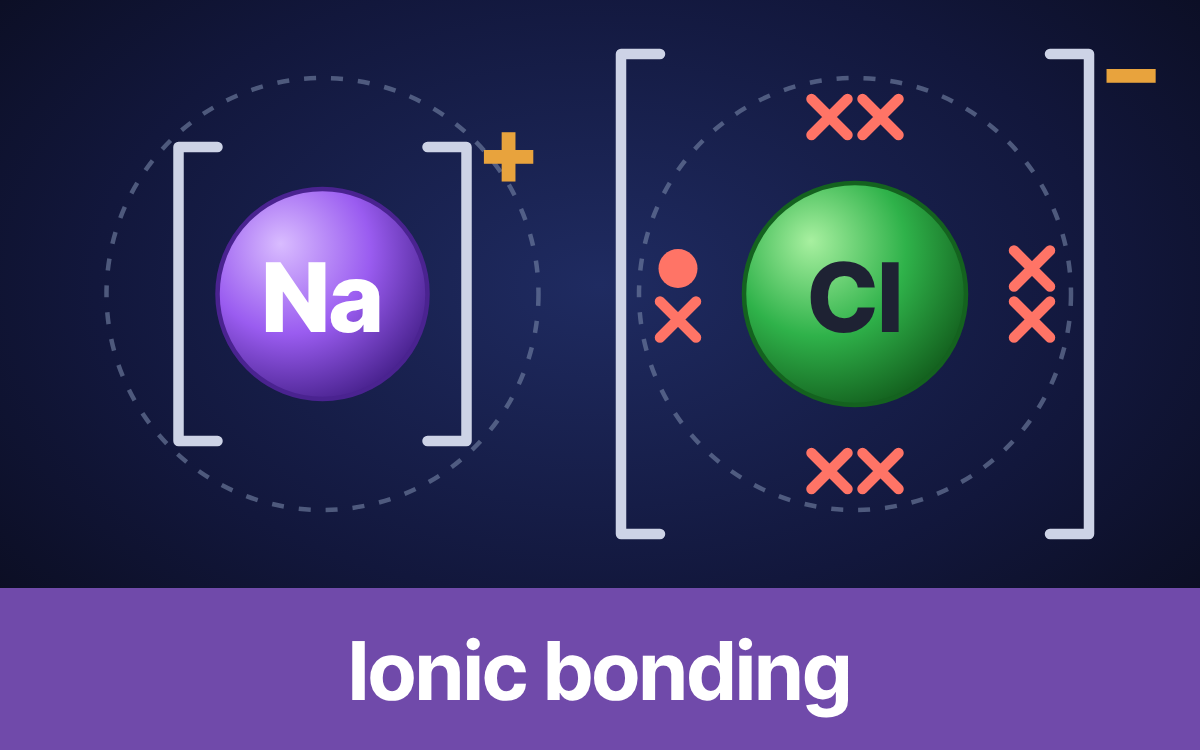 Ionic bonding: ions held in a lattice
Sodium reacts violently with water and chlorine is poisonous, yet salt is safe to eat. See an electron move from sodium to chlorine, the ions this makes, the electrostatic attraction that holds them in a lattice, the charge on an ion from its group, formulas with compound ions and brackets, and why salt melts at 801 °C.
-
 Covalent and dative bonds: sharing electrons
Why hydrogen atoms pair up and helium atoms do not: a shared pair of electrons, drawn as dots and crosses and as a line. Double and triple bonds, lone pairs, the dative bond drawn as an arrow, and counting the pairs round the middle atom.
-
 Metallic bonding: ions in a sea of electrons
Copper bends and conducts electricity; salt cracks and does not, yet both are lattices of ions. See a metal's outer electrons leave their atoms and move between the positive ions, the attraction that holds them, why the electrons carry a current, why a layer can slide without breaking, and why magnesium melts so much higher than sodium.
-
 Structure and properties: four kinds of solid
Diamond and graphite are both carbon, yet one cuts glass and the other rubs off on paper. Put sodium chloride, magnesium, diamond, graphite, iodine and ice on a test bench: heat them, connect a bulb, drop them in water, and see in the zoom what gives way. Four structures explain every melting point and every bulb.
-
 Shapes of molecules: why water is bent
Water is H₂O, so why is the molecule bent and not straight? See how pairs of electrons round an atom push each other as far apart as possible, meet the shapes for two to six pairs, see what a lone pair does to the angle, and work out the shape of an ion the examiners have set. Turn every molecule with your finger, build shapes yourself, and answer questions laid out as on the exam paper. About 13 minutes.
-
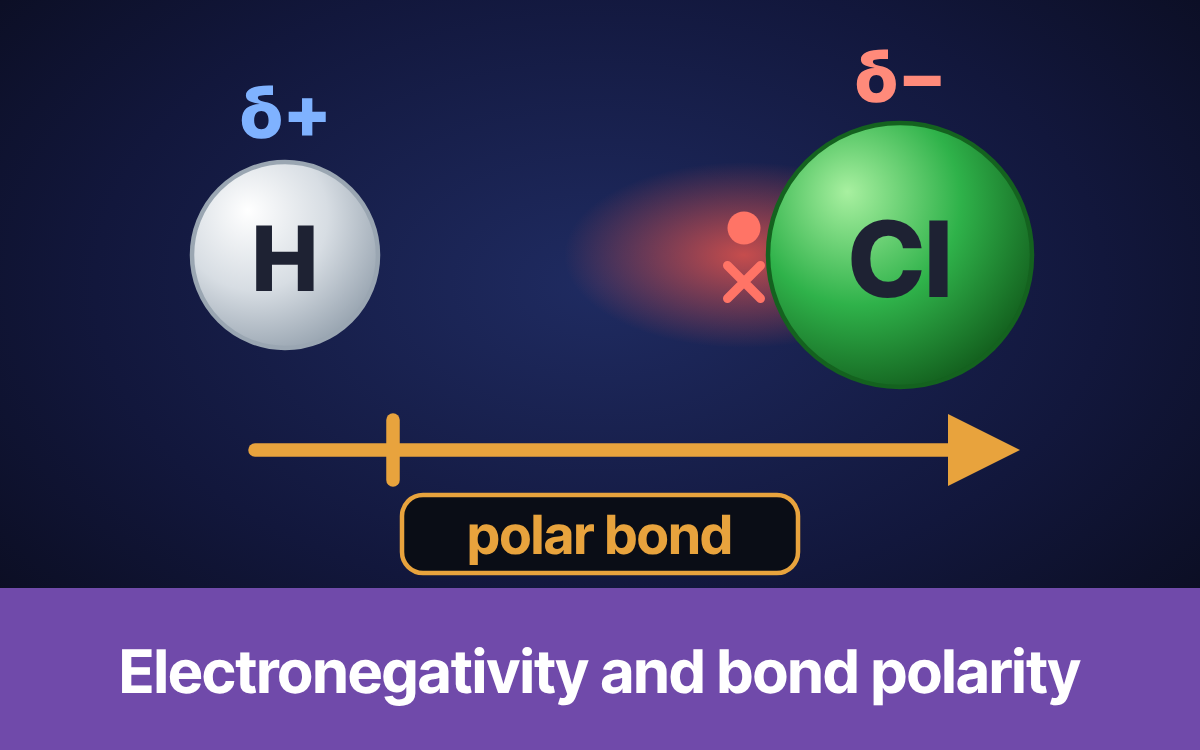 Electronegativity and bond polarity: polar bonds and polar molecules
A charged balloon pulls a stream of water sideways, while hexane runs straight. See a shared pair of electrons sit nearer the atom that pulls harder, label the bond δ+ and δ−, follow bonds from non-polar to ionic, and turn molecules by hand to see when their dipoles cancel and when they add up.
-
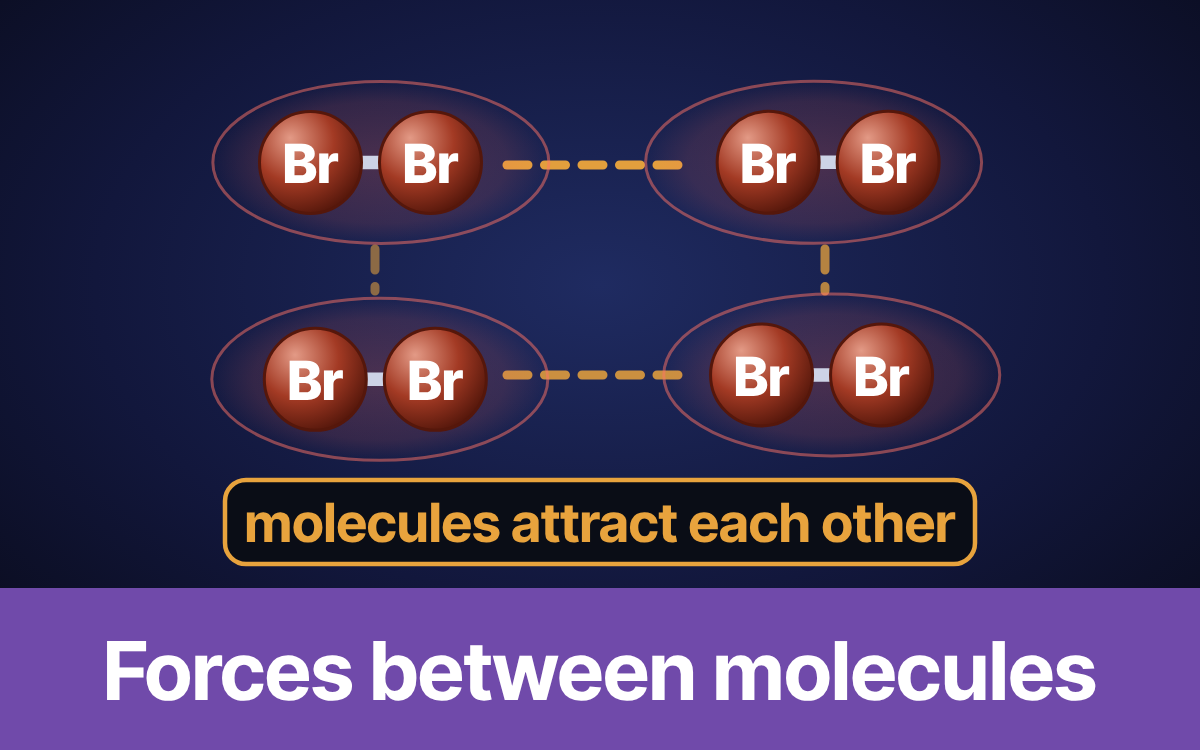 Forces between molecules: why boiling points differ
Chlorine is a gas, bromine a liquid and iodine a solid, yet they are the same kind of molecule. See molecules leave a boiling liquid whole, the flickering electron clouds that pull molecules together, permanent dipoles lining up, hydrogen bonds between water molecules, why water, ammonia and hydrogen fluoride boil so high, and why ice floats.