Topics
A-level Chemistry (AQA 7405)AS Chemistry (AQA 7404), in the order of the specification. Open a topic to see its lessons. The A-level-only topics are greyed out: they are not in the AS exams.
Physical chemistry
-
3.1.1 Atomic structure Lessons ready
Fundamental particles; mass number and isotopes; electron configuration.
Fundamental particles
-
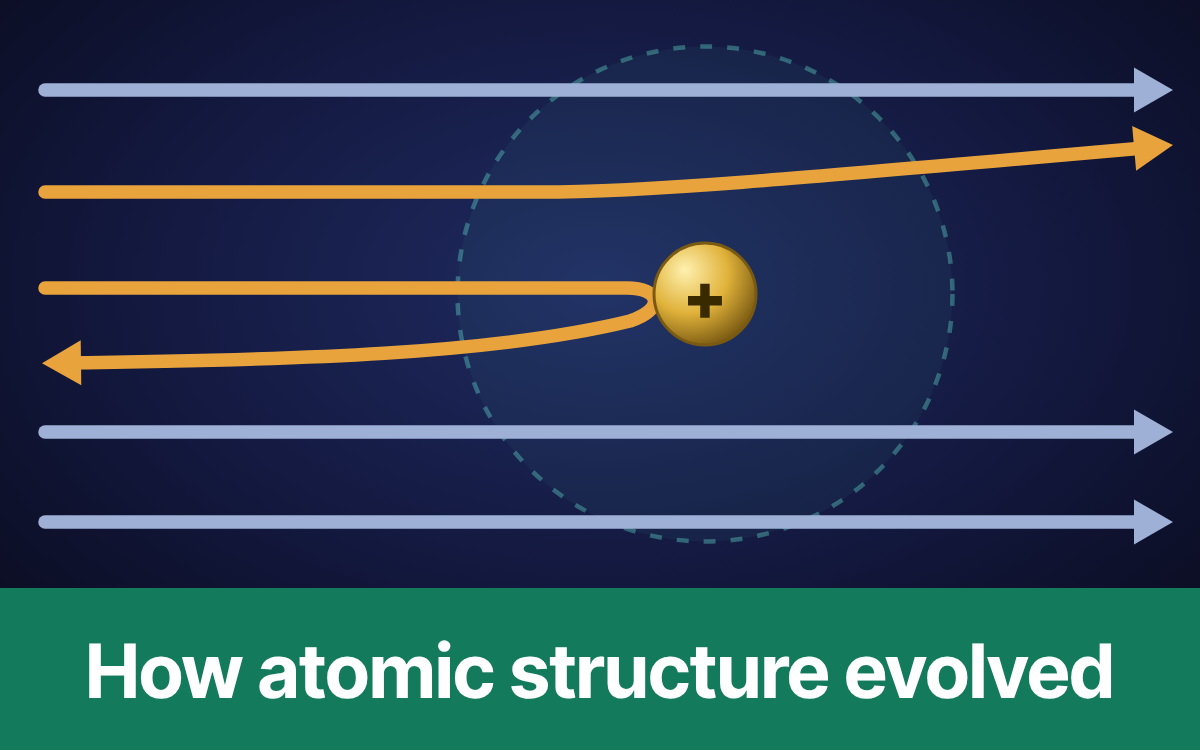 Atomic structure has evolved over time
How did scientists discover what is inside an atom? Follow the evidence from Dalton's solid spheres to today's atomic model. Investigate the gold (Au) foil experiment yourself, then practise exam-style questions. About 14 minutes.
-
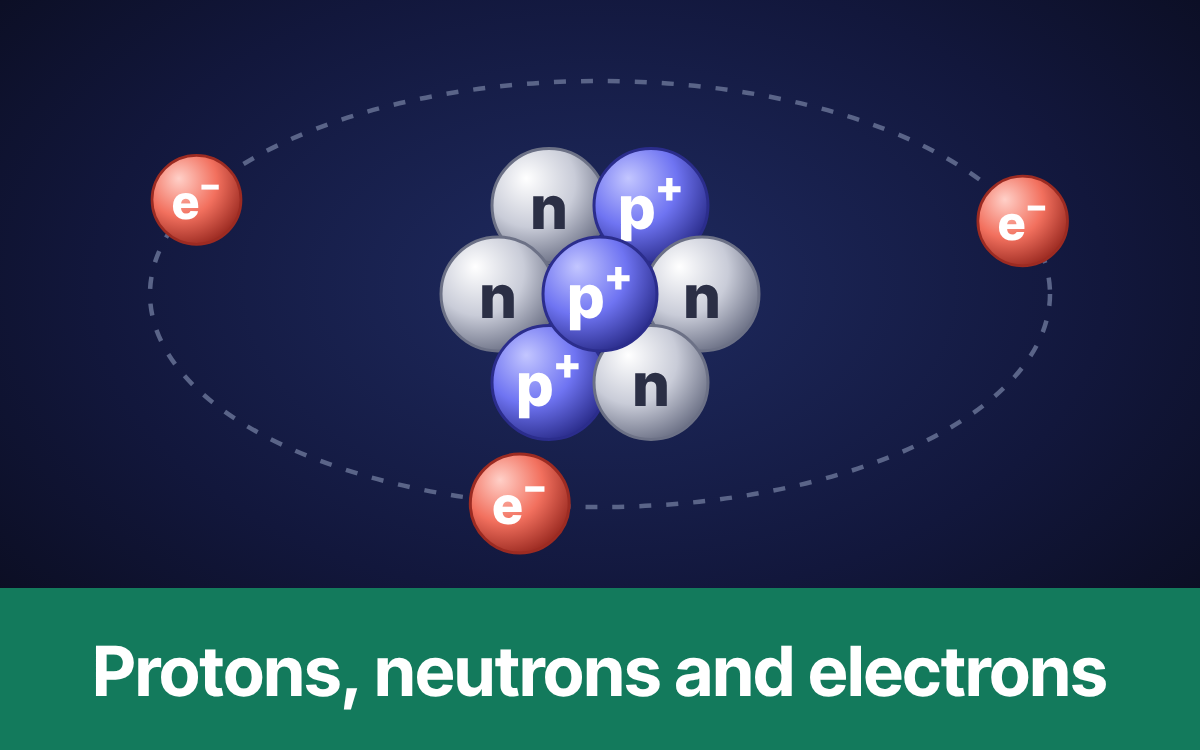 Protons, neutrons and electrons: relative charge and mass
Atoms are built from three types of particle: protons, neutrons and electrons. Discover where these particles are found, their relative charges and masses, what atomic number and mass number tell us, how to read nuclear symbols and how ions form. Then build atoms and ions yourself and answer exam-style questions. About 14 minutes.
Mass number and isotopes
-
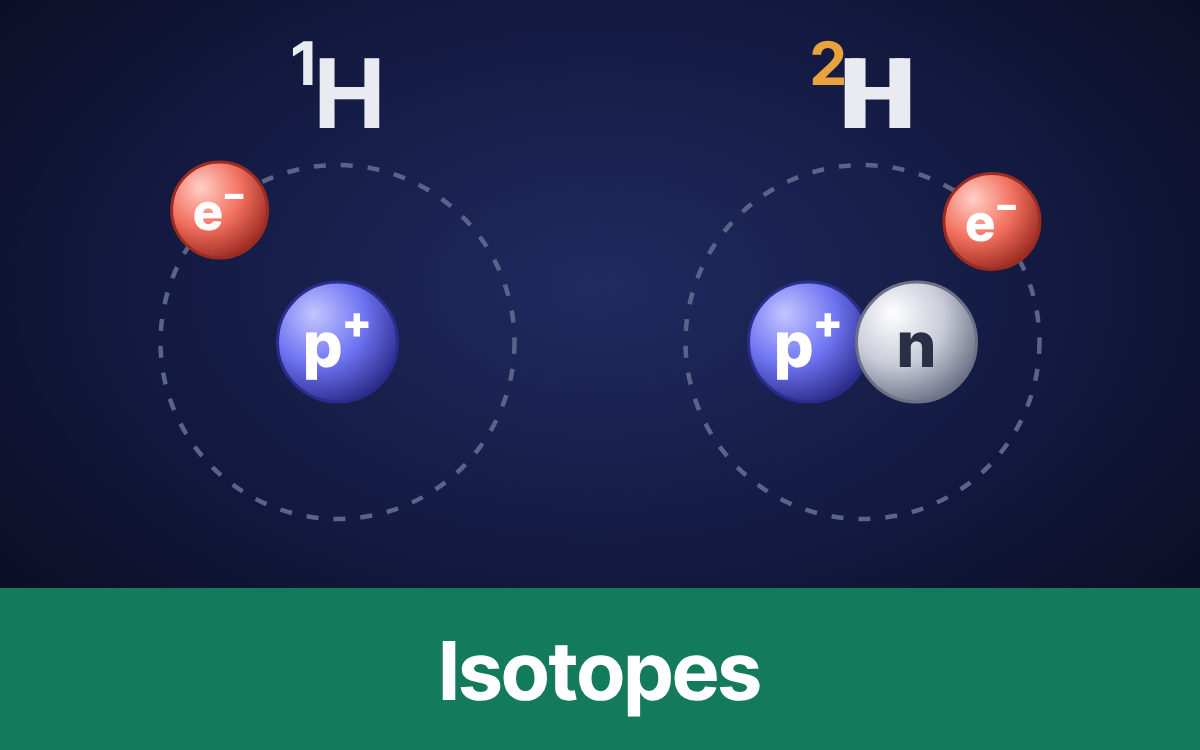 Mass number and isotopes
Two ice cubes look the same, but one floats and the other sinks. Find out what isotopes are and count the particles in their atoms and ions. Learn why isotopes have different masses but take part in the same chemical reactions. Then compare isotopes yourself and answer questions laid out as on the exam paper. About 12 minutes.
-
 Time of flight mass spectrometry
No balance can weigh one atom, so how do we know how heavy atoms are? Follow magnesium through a time of flight mass spectrometer one stage at a time, read its spectrum, weigh a whole molecule by electrospray, then run the spectrometer yourself and answer questions laid out as on the exam paper. About 15 minutes.
-
 Relative atomic mass from isotopic abundance
No chlorine atom has a mass of 35.5, so why does the periodic table say 35.5? Build the average of a mixture of isotopes step by step, define relative atomic mass, calculate it from a mass spectrum, work back to an abundance, and meet relative molecular mass. Then mix the isotopes yourself and answer questions laid out as on the exam paper. About 12 minutes.
Electron configuration
-
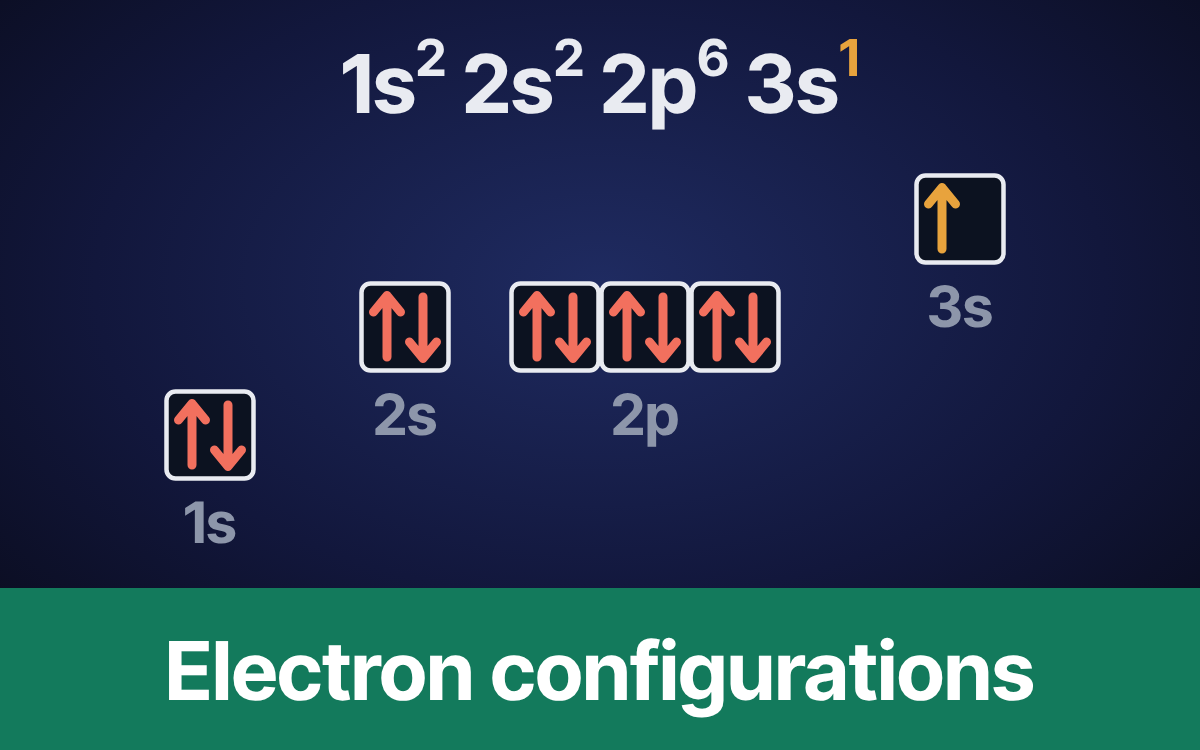 Electron configurations: shells and sub-shells (orbitals)
Neon reacts with nothing; sodium, with one more electron, reacts violently with water. Why? Build up how electrons are arranged, step by step: shells, sub-shells, orbitals and spin, the order of filling, writing a configuration, chromium and copper, and ions. Then fill atoms yourself and answer questions laid out as on the exam paper. About 15 minutes.
-
 Ionisation energies: the evidence for shells and sub-shells
Sodium always forms Na⁺ and never Na²⁺. What stops the second electron leaving? Build up what an ionisation energy is, how to write its equation and what decides its size; then see how the jumps and dips in ionisation energies are the evidence for shells and sub-shells. Remove electrons yourself, then answer questions laid out as on the exam paper. About 15 minutes.
-
-
3.1.2 Amount of substance Lessons ready
Formulas, the mole, equations, gases, empirical formulas, solutions and titrations.
The lessons, in order
-
 The mole: counting atoms by weighing
How chemists count atoms with a balance: the mole and the Avogadro constant.
-
 Moles, mass and atoms: n = m ÷ M
From a mass on a balance to an amount in moles, and on to the number of particles.
-
 Balancing equations: change the numbers in front, never the formulas
H₂ + O₂ → H₂O loses an oxygen atom, and atoms cannot vanish. Learn to balance equations step by step: count the atoms, never change a formula, change how many, one element at a time, odd and even, halves, state symbols, and ionic equations where the charges balance too. Then balance equations yourself and answer questions laid out as on the exam paper. About 12 minutes.
-
 Reacting masses: from an equation to grams
From a balanced equation and one mass to the mass of every other substance in the reaction, through moles.
-
 Limiting reagents: which reactant runs out?
When one reactant runs out first: how to find it, the product it allows, and how much of the other is left over.
-
 The ideal gas equation: pV = nRT
You cannot count the atoms in a cylinder of gas, so how do you find out how much is there? Squeeze, heat and fill a cylinder of helium to see how pressure, volume, temperature and amount are linked, put them into one equation, learn the unit conversions, and work out an amount of gas. Then move the quantities yourself and answer questions laid out as on the exam paper. About 12 minutes.
-
 Concentration: moles in every cubic decimetre
How much is dissolved in each drop: c = n ÷ V in mol dm⁻³, volumes in cm³, making a solution of known concentration, dilution and the concentration of one ion.
-
 Titration calculations: finding an unknown concentration
Use a solution you know to measure one you do not: the titre, concordant titres, n = c × V, the ratio, c = n ÷ V, and a sample diluted first.
- Percentage yield and atom economy Coming soon
- Empirical and molecular formulae Coming soon
-
-
3.1.3 Bonding Lessons ready
Ionic, covalent and metallic bonding; shapes of molecules; polarity and the forces between molecules.
The lessons, in order
-
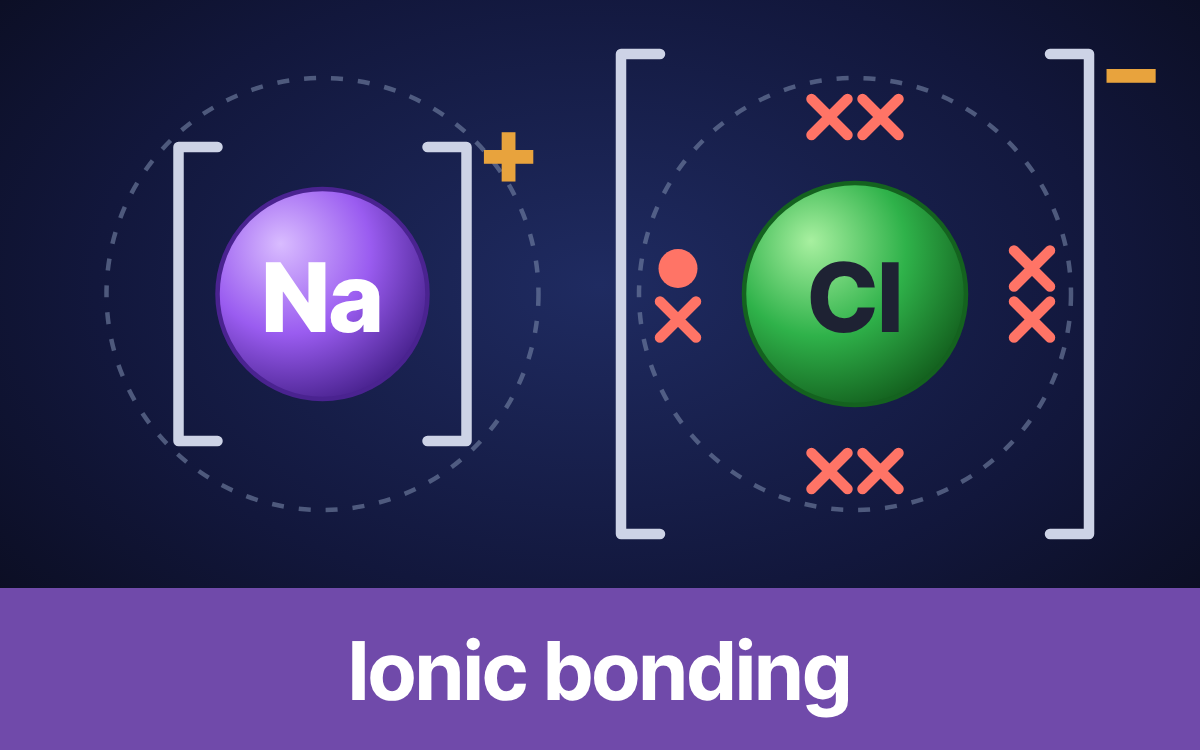 Ionic bonding: ions held in a lattice
Sodium reacts violently with water and chlorine is poisonous, yet salt is safe to eat. See an electron move from sodium to chlorine, the ions this makes, the electrostatic attraction that holds them in a lattice, the charge on an ion from its group, formulas with compound ions and brackets, and why salt melts at 801 °C.
-
 Covalent and dative bonds: sharing electrons
Why hydrogen atoms pair up and helium atoms do not: a shared pair of electrons, drawn as dots and crosses and as a line. Double and triple bonds, lone pairs, the dative bond drawn as an arrow, and counting the pairs round the middle atom.
-
 Metallic bonding: ions in a sea of electrons
Copper bends and conducts electricity; salt cracks and does not, yet both are lattices of ions. See a metal's outer electrons leave their atoms and move between the positive ions, the attraction that holds them, why the electrons carry a current, why a layer can slide without breaking, and why magnesium melts so much higher than sodium.
-
 Structure and properties: four kinds of solid
Diamond and graphite are both carbon, yet one cuts glass and the other rubs off on paper. Put sodium chloride, magnesium, diamond, graphite, iodine and ice on a test bench: heat them, connect a bulb, drop them in water, and see in the zoom what gives way. Four structures explain every melting point and every bulb.
-
 Shapes of molecules: why water is bent
Water is H₂O, so why is the molecule bent and not straight? See how pairs of electrons round an atom push each other as far apart as possible, meet the shapes for two to six pairs, see what a lone pair does to the angle, and work out the shape of an ion the examiners have set. Turn every molecule with your finger, build shapes yourself, and answer questions laid out as on the exam paper. About 13 minutes.
-
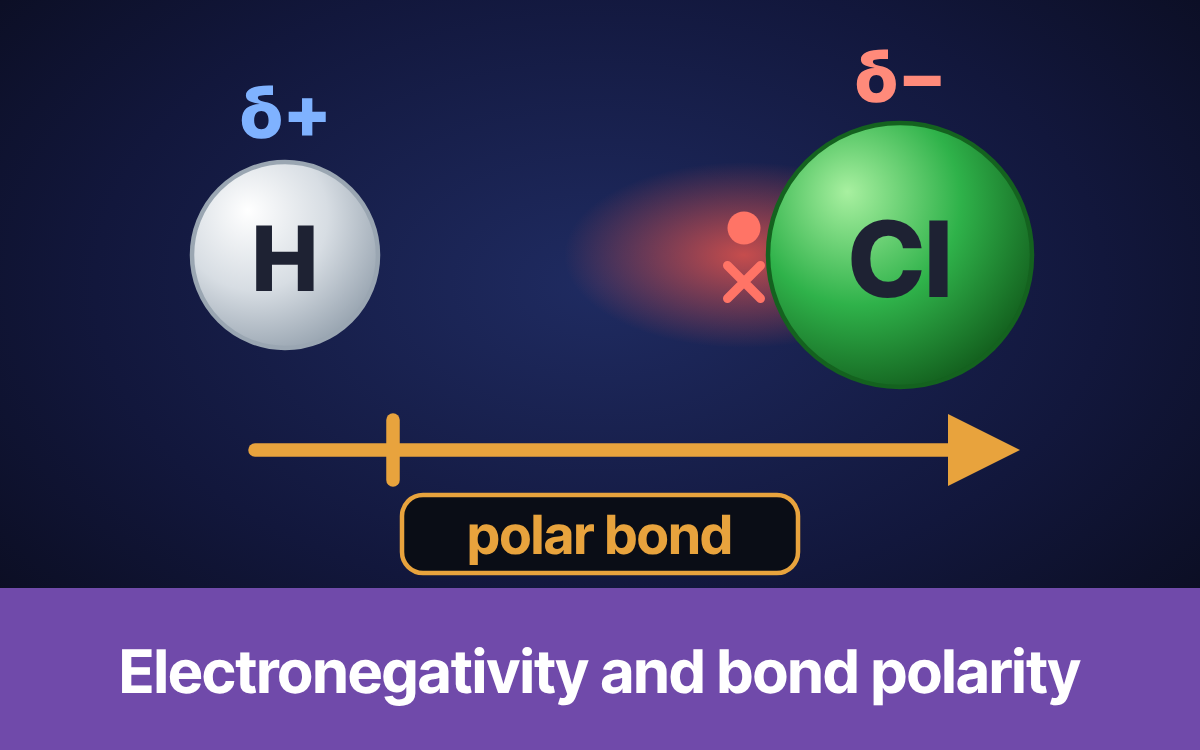 Electronegativity and bond polarity: polar bonds and polar molecules
A charged balloon pulls a stream of water sideways, while hexane runs straight. See a shared pair of electrons sit nearer the atom that pulls harder, label the bond δ+ and δ−, follow bonds from non-polar to ionic, and turn molecules by hand to see when their dipoles cancel and when they add up.
-
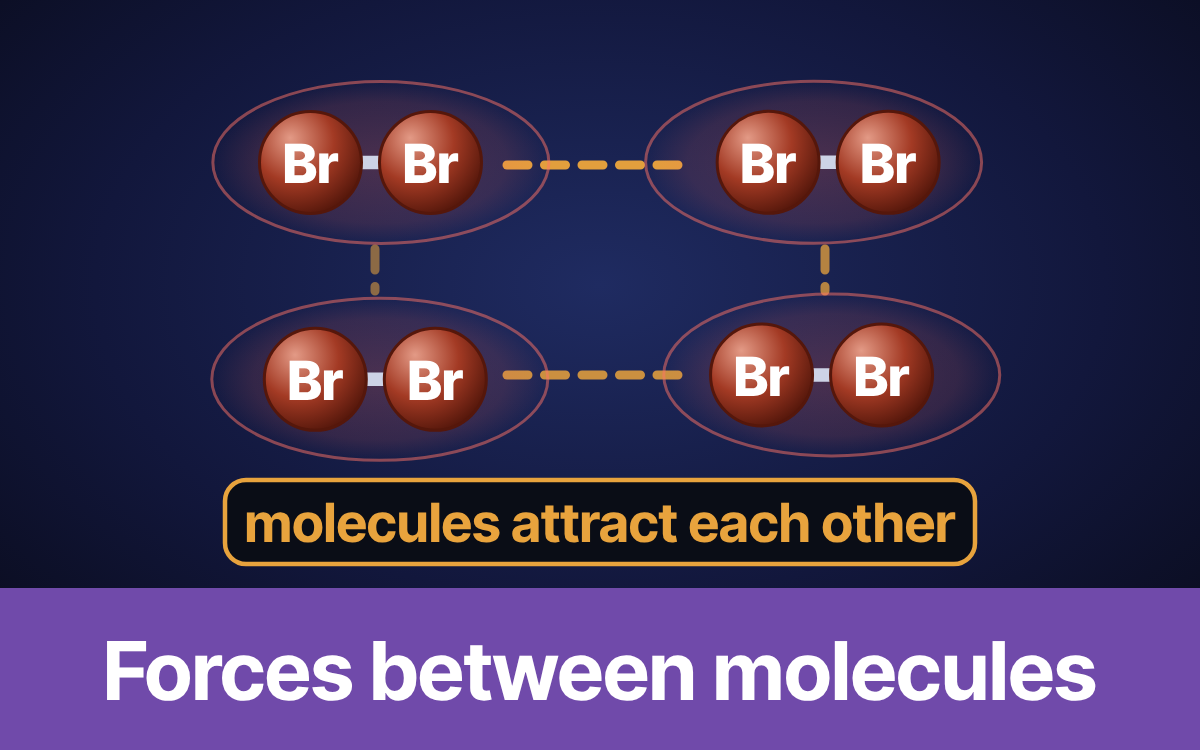 Forces between molecules: why boiling points differ
Chlorine is a gas, bromine a liquid and iodine a solid, yet they are the same kind of molecule. See molecules leave a boiling liquid whole, the flickering electron clouds that pull molecules together, permanent dipoles lining up, hydrogen bonds between water molecules, why water, ammonia and hydrogen fluoride boil so high, and why ice floats.
-
-
3.1.4 Energetics Lessons ready
Enthalpy changes, calorimetry, Hess's law and bond enthalpies.
The lessons, in order
-
 Enthalpy change: exothermic and endothermic
Natural gas sits cold in the pipes, yet burns hot on the hob. Watch a cup warm or cool as an enthalpy level diagram fills beside it, write ΔH with its sign, see the activation energy hump that keeps methane waiting for a spark, and learn what standard conditions are.
-
 Standard enthalpy changes: formation and combustion
Methane, ethanol and hydrogen all burn: which gives the most heat? Count one mole under an enthalpy level diagram, build the definitions of the standard enthalpies of combustion and formation chip by chip, write their equations with fractions and state symbols, and find the answer per mole, per gram and per litre.
-
 Calorimetry: from a temperature change to ΔH
Stomach acid is hydrochloric acid, and an indigestion tablet neutralises it, giving out heat: so why doesn't your stomach heat up? Fill the equation q = mcΔT term by term on a polystyrene cup, turn q into ΔH per mole with its sign and units, pour your own neutralisation, then run the working backwards to answer the stomach.
-
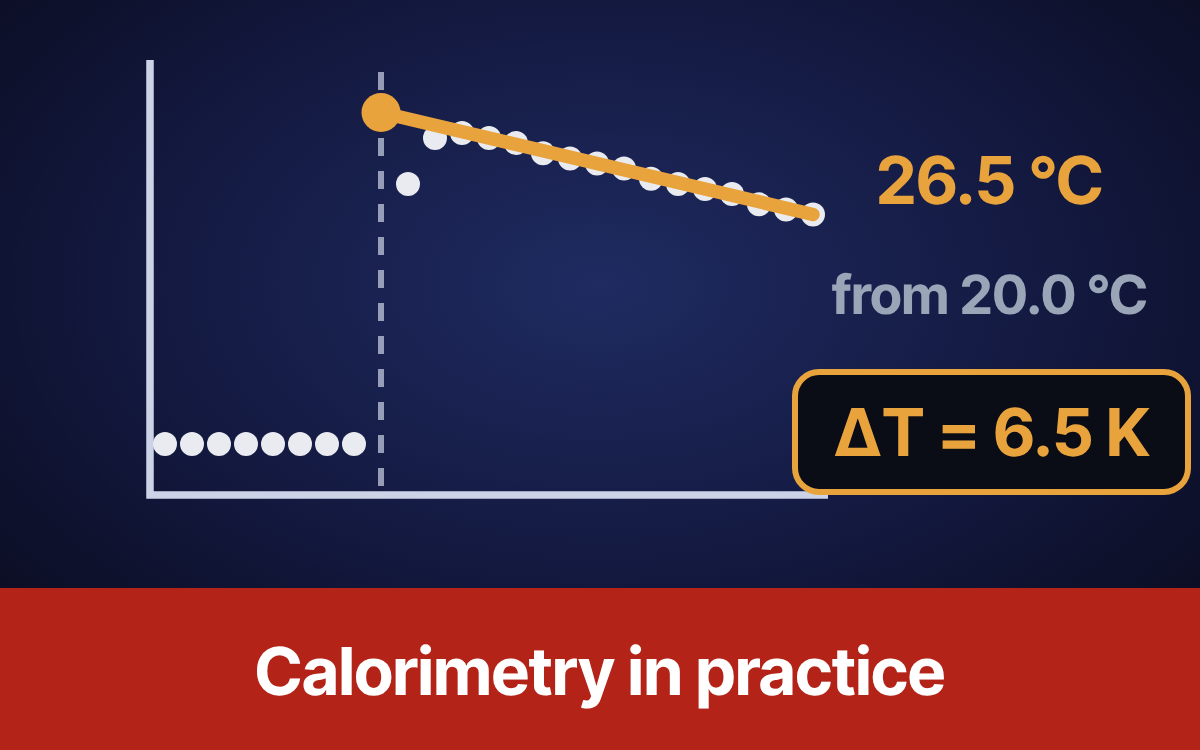 Calorimetry in practice: fuels, heat loss and cooling graphs
A camping stove burns about 40 cm³ of ethanol to boil a litre of water, yet that ethanol gives out nearly three times the heat the water needs: where does the rest go? Burn a fuel under a copper can and find ΔcH, follow the heat that escapes, draw a cooling line back to the time of mixing, then answer the stove.
- Hess's law: enthalpy cycles Coming soon
- Bond enthalpies: breaking and making bonds Coming soon
-
-
3.1.5 Kinetics Lessons ready
Collision theory, the Maxwell–Boltzmann distribution, and what changes the rate.
The lessons, in order
- The Maxwell–Boltzmann distribution Coming soon
- Temperature and rate Coming soon
- Concentration, pressure and rate Coming soon
- Catalysts Coming soon
- 3.1.6 Chemical equilibria Coming soon
- 3.1.7 Oxidation, reduction and redox equations Coming soon
- 3.1.8 Thermodynamics A-level only Coming soon
- 3.1.9 Rate equations A-level only Coming soon
- 3.1.10 The equilibrium constant Kp A-level only Coming soon
- 3.1.11 Electrode potentials and cells A-level only Coming soon
- 3.1.12 Acids and bases A-level only Coming soon

Inorganic chemistry
- 3.2.1 Periodicity Coming soon
- 3.2.2 Group 2, the alkaline earth metals Coming soon
- 3.2.3 Group 7, the halogens Coming soon
- 3.2.4 Period 3 elements and their oxides A-level only Coming soon
- 3.2.5 Transition metals A-level only Coming soon
- 3.2.6 Reactions of ions in aqueous solution A-level only Coming soon
Organic chemistry
- 3.3.1 Introduction to organic chemistry Coming soon
- 3.3.2 Alkanes Coming soon
-
3.3.3 Halogenoalkanes Lessons ready
Nucleophilic substitution, elimination and ozone depletion.
The lessons, in order
- Elimination: making alkenes Coming soon
- Ozone depletion Coming soon
- 3.3.4 Alkenes Coming soon
- 3.3.5 Alcohols Coming soon
- 3.3.6 Organic analysis Coming soon
- 3.3.7 Optical isomerism A-level only Coming soon
- 3.3.8 Aldehydes and ketones A-level only Coming soon
- 3.3.9 Carboxylic acids and derivatives A-level only Coming soon
- 3.3.10 Aromatic chemistry A-level only Coming soon
- 3.3.11 Amines A-level only Coming soon
- 3.3.12 Polymers A-level only Coming soon
- 3.3.13 Amino acids, proteins and DNA A-level only Coming soon
- 3.3.14 Organic synthesis A-level only Coming soon
- 3.3.15 NMR spectroscopy A-level only Coming soon
- 3.3.16 Chromatography A-level only Coming soon

Maths toolbox
In the lab
Ticks show the lessons you have worked through on this device.